
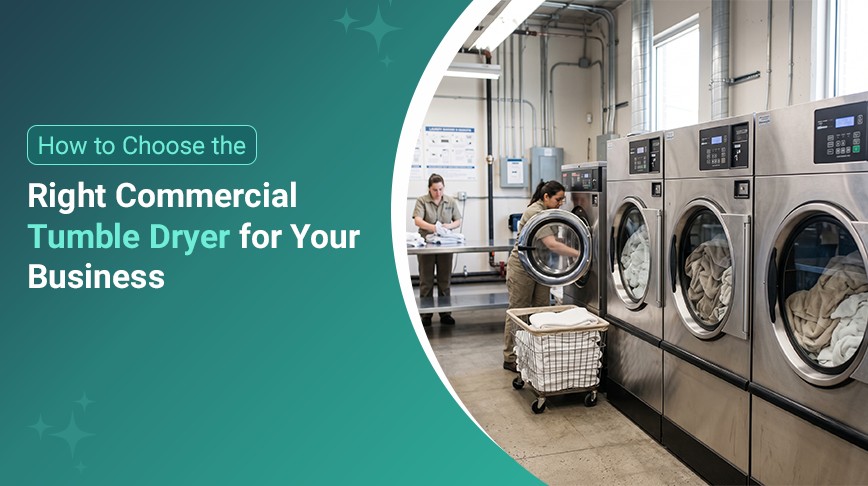
Selecting the right commercial tumble dryer is about more than finding a dryer with sufficient capacity and installing it in the laundry room. The appropriate dryer has to match the laundry capacity, fabric types, available space, and how the process runs.
A small guest house, hotel, care facility, and an industrial workwear operation will have different requirements. This is especially important when it comes to drying the laundry. A dryer that performs effectively in one company might not be the same in another.
Businesses that search for commercial tumble dryers in Ireland need to start by considering the laundry operation and not the equipment. The goal is to get equipment that provides quality drying results without incurring unnecessary energy costs and other related issues.
Start With Your Everyday Laundry Volume
First of all, you must enquire about the amount of laundry that needs to be dried on a regular day. Consider both your normal workload and your maximums. The hotel may have moderate loads of laundry during quiet times, while high demand will lead to higher numbers of sheets and towels to wash. On the other hand, the care home may have a constant load of clothes daily. The sports facility can expect large loads during games or training.
Capacity will matter in the sense that an undersized dryer will easily become a bottleneck. Once the washer has done its job and the dryer is still occupied, clean laundry needs to wait. More work for the staff members will be required, and it will increase the duration of the entire process. However, if you purchase a dryer that is much bigger than the load you usually have, you will face partially loaded dryers.
Partially loaded dryers are inefficient, and per load, they can become costly. Thus, the right capacity is the one that matches your normal load with some room for growth.
Align The Dryer With The Laundry Type
While drying, not all textiles behave similarly. Towels, bed linen, uniforms, protective work clothes, and delicate materials may also require individual drying conditions. Some materials withstand higher temperatures during the drying process, but others demand more delicate conditions to prevent wear from the process. Think about what you process in your company the most.
A hotel would require processing mostly towels, bedsheets, and other guests’ linen. A health care or care institution will process bedding, towels, clothes, and personal belongings. In an industrial facility, you will have to process uniforms, protective equipment, and dirty work clothes. The choice of the dryer will depend on the conditions that are required for particular materials rather than equal conditions for everything processed
Professional dryers nowadays provide adjustable programs and controls that allow setting specific drying parameters depending on application. Some professional dryers also feature humidity control and other technologies designed to get consistent results without heating each load to the maximum.
Right Capacity Between The Washer And Dryer
A dryer works within a process flow. The dryer capacity must be coordinated with the washing machine capacity in the system. If the washing capacity is greater than the drying capacity, it can end up being the constraining element of the entire process. There is no point in having a large washing machine if the dryer capacity cannot cope with all the washed clothes.
The other way round is equally true. A full dryer capacity may not necessarily improve efficiency if the machines are working at less than half capacity. The intention is to have a system with balanced washing and drying capacity. This especially comes in handy for business owners who are using several machines or even planning a new laundry room. Considering the entire process from dirty clothes through washing, drying, ironing, and folding will yield more results than selecting the machines individually.
Consider The Amount Of Energy The Dryer Uses
Drying can sometimes be a relatively energy-intensive process, and thus energy consumption needs to be considered when choosing the equipment. Purchasing cost is only a portion of the total cost of the dryer. A dryer that is used daily for several hours may affect operational cost much more over its entire lifespan. Methods of heating, cycle duration, load weight, and moisture removal effectiveness all affect energy consumption.
There are also different methods of heating, which can be applied for different equipment types and applications. Professional tumble dryers may be equipped with electric, gas, or steam heating. On the other hand, heat-pump technology provides yet another choice when energy consumption reduction and lack of exhaust are prioritised.
Unlike conventional drying equipment, heat-pump dryers operate by passing the air along a closed cycle and extracting moisture by condensation. This makes heat-pump dryers especially effective in certain conditions, when exhaust arrangements are hard to accomplish. The choice depends on the facility, utilities, workload, and expected usage.
Prioritise Laundry Room Before Buying
An apparent fit of the dryer may not necessarily mean that it fits the room perfectly well. When deciding to purchase one, take into consideration the following:
- Space on the floor available
- Dimensions of the door and access
- Ventilation
- Arrangements of the exhaust system
- Connections in terms of electricity, gas, or steam
- Space available for personnel to work
- Positions of other machines and equipment such as the washer
- Movement of linens within the room
It is especially vital in smaller hotels, guest houses, nursing homes, and other institutions where there is little space for laundry. In small spaces, another option is to go for a washer and dryer stacked up. This way, the businesses can better utilise their vertical space instead of having to dedicate floor space for each machine separately. Effective planning of the laundry room does not have anything to do with cramming more machines in the room.
Consider Drying Controls and Operator-Friendliness
A professional clothes dryer will only work as efficiently as its operation. The controls must be simple to use and consistent for your staff. Programmable drying programs can help your operators select the right settings based on the laundry type, instead of guessing. Automatic humidity control, adjustable drying settings, and easy-to-clean filters can also make daily operations easier.
Some professional dryers enable adjustment of the drying settings during the cycle process, providing additional options in case a load needs to be adjusted. This is important, as a machine that comes with all the technical qualities but is difficult to operate will give you inconsistent results. The best machine is the one that integrates perfectly into your workflow.
Maintenance and Servicing Should Not Be Overlooked
Even the most innovative design will require maintenance. It will be necessary to handle lint accumulation, clean filters, and examine components during regular maintenance work. The more time small issues have to go unnoticed, the more they will eventually cost. Moreover, maintenance can contribute to the efficient drying process and prevent unexpected breakdowns.
A failure in equipment will mean much more for a hotel, care home or industrial company than simply an inconvenience. Without a working dryer, there is a risk of accumulating clean laundry. When choosing between commercial tumble dryers in Ireland, ensure you know what will happen once the equipment is installed. Learn about maintenance services and support that are offered to ensure that nothing unexpected occurs. The equipment is important, but the support is also crucial.
Industrial Tumble Dryers For Large Scale Operation
If your business handles a large volume of washing, then there is a chance that you will require industrial tumble dryers. These machines are made for greater output and have a high capacity. Such dryers may be suitable for industrial laundries, larger hospital facilities, linen services, and businesses where the drying process is continuous.
For instance, professional high-capacity dryers are available in the range of 55 kg and 75 kg for industrial laundering operations with high output. It does not mean that the bigger, the better. A high-capacity dryer is a good idea only if the workload is large enough to justify its use.
Final Thoughts
The process of selecting a commercial tumble dryer is similar to aligning the equipment to the operation. There is no one solution for every business as different businesses have different needs. A small hospitality business will need different types of machinery than a nursing home, laundrette, or large industrial laundry facility.
Businesses interested in purchasing commercial tumble dryers in Ireland can contact WALE. The company can evaluate the requirements of the laundry operation and suggest appropriate equipment. It operates commercial laundries and supplies professional laundry equipment; it approaches equipment selection from a very practical angle.
Frequently Asked Questions
How big should the tumble dryer be for a commercial laundry?
It will depend on the amount of laundry that you have to dry per day. Besides that, it also depends on the size of the washing machines that you have, and whether you need the loads dried within a certain time frame.
Are commercial tumble dryers more efficient than domestic dryers?
Commercial dryers are made for much more intensive use. It all depends on the particular use of the appliance, capacity, heating source, and operation style rather than whether it is commercial or not.
What are industrial tumble dryers for?
Industrial tumble dryers are made specifically for high-intensity laundry processing when efficiency and productivity matter. These dryers can be useful in a wide range of applications.
Which kind of tumble dryer should I get?
It all depends on your needs and the utilities you have at your disposal, as well as your load and operating expenses.