
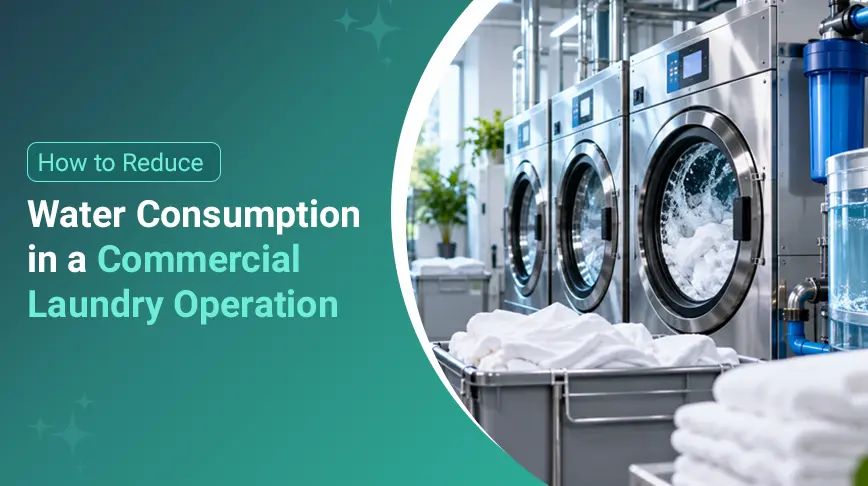
Hotels, hospitals, care homes and industrial textile operations can get through a substantial amount of water every day. In a busy laundry, that water bill is only part of the cost. Water also needs to be heated, treated and discharged, while detergents and other chemicals add to the overall expense.
The good news is that reducing water consumption does not have to mean compromising wash quality or hygiene. Modern equipment, better wash programming, water-recycling systems and more efficient operating practices can all help reduce the amount of fresh water a laundry needs.
For high-volume operations, even a small reduction in water used per kilogram or pound of linen can add up significantly over the course of a year. Here are some practical ways to make a commercial laundry operation more water-efficient.
Upgrade To High-Efficiency Laundry Equipment
The equipment used in a laundry has a direct impact on how much water each load requires.
Older washer extractors can use around 3 to 4 gallons of water per pound of linen, while newer high-efficiency machines can bring consumption down to around 1 to 1.5 gallons per pound or less, depending on the machine, programme and application.
That difference becomes significant when a facility is processing hundreds or thousands of pounds of linen every day.
Use Programmable Controls
Modern commercial washing machines use microprocessor controls to manage individual stages of the wash programme.
This gives operators more control over water levels, temperatures, wash times, rinse cycles and chemical dosing. Programmes can be adjusted according to the type and level of soiling rather than relying on the same settings for every load.
This can prevent unnecessary water use. A lightly soiled load, for example, may not need the same number of rinses as heavily soiled workwear.
Precise chemical dosing also helps. Using too much detergent can leave residue behind and require additional rinsing, while too little can result in poor cleaning and rewashing.
Look At Extraction Speed
High-speed extraction does not directly reduce the amount of water used during washing, but it can have a major effect on what happens afterwards.
A washer extractor with a high G-force removes more moisture from linen during the spin cycle. The dryer then has less water to remove, which can reduce drying time and energy consumption.
Better extraction can also help prevent damp linen from sitting around for too long. If laundry develops odours or becomes re-soiled and needs to be washed again, the operation ends up using more water anyway.
Reuse Water Where Practical
A significant amount of water leaves a commercial washing machine before it has reached the end of its useful life.
Final rinse water, for example, is generally cleaner than water discharged during the earlier stages of the wash. Water-recovery systems can capture and treat suitable wastewater before returning it to the process.
Water Reuse Tanks
A water-reuse system can collect water from selected stages of the wash cycle and hold it in a storage tank. Once treated appropriately, this water can be reused for applications such as the initial fill or pre-wash of a subsequent load.
Depending on the equipment and process, water-reuse systems can significantly reduce fresh water demand. Some systems report savings of around 30 to 50 per cent. Recovered rinse water may still contain useful heat, reducing the amount of energy required to heat the next batch of fresh water.
The exact saving will depend on the laundry’s equipment, wash programmes and water-recovery setup.
Continuous Batch Washers
High-volume laundries have another option: continuous batch washers, also known as tunnel washers.
Rather than processing each load completely separately, tunnel washers move linen through a series of washing compartments. Water flows in the opposite direction to the movement of the linen, allowing relatively clean water to be used at the later stages before moving towards earlier, more heavily soiled stages.
This counter-current process makes much more efficient use of water. For high-volume facilities, tunnel washing can reduce water consumption to around 0.5 to 0.8 gallons per pound of linen, depending on the equipment and wash process.
It is a different proposition from a conventional washer extractor, so it is generally most relevant to laundries processing substantial volumes every day.
Consider An Ozone Wash System
Ozone laundry systems introduce ozone gas into the wash process. Ozone is a powerful oxidising agent that can help break down organic soils and contaminants.
One of the advantages of ozone systems is that they can operate effectively at lower water temperatures.
How Ozone Can Reduce Water Use
Ozone can contribute to water savings in several ways:
- It can help clean certain loads with fewer rinse stages, reducing the amount of water used during the complete cycle.
- Lower-temperature washing reduces the energy needed to heat the water.
- Shorter wash programmes can reduce the amount of water and electricity consumed during each cycle.
- Effective treatment can help reduce rewash rates, avoiding the water required to process the same linen twice.
The potential reduction varies according to the laundry, the equipment and the wash formula. Ozone is not a substitute for appropriate wash programming, chemical dosing or hygiene controls.
It is also worth remembering that not every textile or soil type should automatically be treated with the same programme. The wash process needs to reflect the items being cleaned.
Get The Load Size Right
Even efficient equipment can waste water if it is not loaded correctly.
Underloading is one of the easiest ways to increase water consumption per kilogram or pound of laundry. A 100 lb machine running a 50 lb load may still use a substantial proportion of the water required for a full load.
The result is more water and energy being used for every pound of clean linen produced.
Overloading creates a different problem. When a drum is packed too tightly, there is less mechanical action and less room for water and chemistry to move through the textiles. Cleaning can suffer, increasing the likelihood of rewashing.
Aim for loads that are appropriate for the machine’s recommended capacity rather than simply trying to fill the drum as much as possible.
Staff should also be trained to weigh laundry where practical. Knowing the typical weight of carts, bags or slings makes it easier to maintain consistent loading.
Prevent Unnecessary Programme Changes
Modern machines offer considerable control, but that flexibility needs to be managed. If operators can freely change water levels, add rinse cycles or alter programmes, small amounts of unnecessary water use can accumulate across hundreds of loads.
Password-protected controls or restricted access to programme settings can help prevent accidental changes. It is also useful to make sure staff understand why particular programmes have been selected. A well-designed wash programme only saves water if it is consistently followed.
Keep Equipment Maintained
Leaks, faulty valves and other equipment problems can quietly waste large amounts of water. Preventative maintenance should therefore be part of the laundry’s normal operating routine.
Check The Details That Are Easy To Overlook
Small components can have a surprisingly large effect on water consumption. Debris such as coins, buttons and lint can interfere with drain valves and prevent them from closing properly. A faulty solenoid can also allow water to continue flowing after the correct water level has been reached.
Regular inspections can identify these issues before they become expensive problems. It is also worth monitoring actual water consumption. A separate meter for the laundry can make this much easier.
If water use suddenly rises while the amount of laundry being processed stays roughly the same, investigate. The increase could indicate a leak, faulty component, inefficient programme or another operational issue.
Pay Attention To Water Quality
The water entering the laundry can affect both cleaning performance and chemical consumption. Hard water contains higher concentrations of minerals such as calcium and magnesium. These can interfere with detergent performance and contribute to scale inside equipment.
A commercial water softener can help manage hard-water problems where they are present. The appropriate treatment depends on the local water supply and the requirements of the laundry.
Better water quality can support more consistent washing while helping protect equipment from scale build-up.
Build Water Efficiency Into The Whole Laundry Process
Reducing water consumption is rarely about one piece of equipment or one change to a wash programme.
The biggest improvements often come from looking at the complete process. Efficient washers, appropriate extraction speeds, accurate chemical dosing, correctly sized loads, water reuse and preventative maintenance all work together.
Start by measuring how much water the laundry currently uses and compare that with the amount of linen processed. This gives you a useful baseline and makes it easier to identify where the largest savings could come from.
For a high-volume operation, even a modest reduction in water consumption per load can make a meaningful difference to annual water, energy and wastewater costs.
Wrapping Up: A More Efficient Laundry Starts With The Right Setup
Water efficiency is increasingly important for commercial laundries in Ireland, particularly where businesses are processing large volumes of linen every day. The right combination of equipment and operating practices can reduce resource use without compromising the quality of the finished laundry.
WALE can help businesses assess their laundry requirements and identify equipment and systems suited to their operation. From commercial washers and dryers to larger-scale laundry solutions, the focus is on finding an approach that works efficiently in the real world.
Frequently Asked Questions
What’s typical water usage in a commercial laundry?
Traditional washer extractors can use around 2.5 to 3.5 gallons of water per pound of linen, depending on the programme and equipment. High-efficiency machines, water reuse and tunnel washing can reduce this considerably.
How does using less water lower overall costs?
Using less water also reduces the energy required to heat it and can lower wastewater costs. More efficient wash programmes can also reduce detergent consumption, drying requirements and the cost of rewashing poorly cleaned loads.
Does water recycling compromise wash quality or hygiene?
Not when the system is properly designed, operated and maintained. Recovered water needs appropriate treatment and must be used for suitable stages of the process. Hygiene requirements and wash chemistry should always determine how recycled water is used.
Is ozone washing suitable for every commercial laundry?
Ozone can be useful for many commercial laundry applications, including suitable for hotel linen, towels and other textiles. However, the appropriate wash process depends on the textile, level of soiling and hygiene requirements, so ozone is not automatically suitable for every load.