
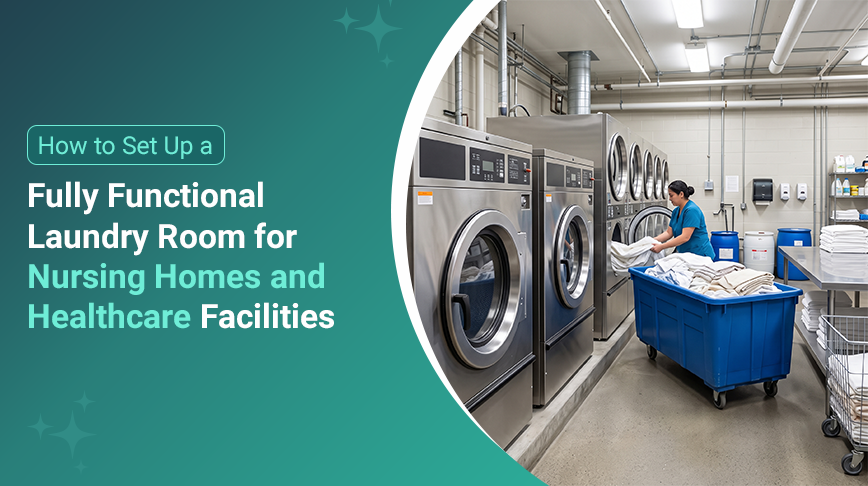
The laundry room in a nursing home has a pivotal role to perform each day. This includes washing bedsheets, towels, patients’ clothes, uniforms, and reusable fabrics that may be differently contaminated and have different cleaning specifications. It is not enough to design the laundry room based on the availability of washing machines.
The laundry should be arranged properly to ensure the appropriate process, proper hygiene, proper equipment, and sufficient speed to provide clean fabric whenever it is needed. Proper healthcare laundry equipment in Ireland could help a lot. However, it is only one element of the process of setting up a laundry.
The arrangement, machine capacity, drying needs, extraction capability, and staff processes are equally important. It is better to go through these factors when setting up a laundry room in a nursing home or healthcare facility.
Begin With The Laundry Workload
Before deciding on any equipment, determine first the volume of laundry that needs to be done at your establishment. Consider the number of patients, beds, the quantity of linen used every day, and how often it has to be changed. It would also help to consider the number of towels, uniforms, and other fabrics that will undergo laundry work.
It is important to consider especially the busiest days since even a laundry setup according to the average daily volume may experience problems. It happens during the weekdays in the busy hours. Determine the approximate daily weight of laundry and how many hours the laundry will run.
This will give you a better basis for determining which machine volumes will suit you. The objective is not just to use the largest machines but rather to base it on the work volume and working hours.
Select Washer Extractors Carefully
The washer extractor forms the heart of the healthcare laundry processes. When selecting nursing home laundry equipment, one should think beyond the drum capacity. The amount of water used, the extraction rate, the programmability, wash cycle lengths, and the type of textiles being laundered can influence the effectiveness of laundry.
Contemporary commercial washer extractors enable the user to control some crucial aspects of the wash cycle, including water quantity, temperature, time taken, and rinsing. Such flexibility helps since different loads will not necessarily need the same processing procedure.
Bedding, towels, personal clothes, and heavily soiled items may need varying programs. Proper programming also ensures that water, energy, and chemicals are not wasted.
Extraction is Important Before Selecting a Dryer
Ensure you do not overlook the connection between the washer extractor, and dryer. Moisture content can be reduced effectively by using the high-speed washer-extractor. This would mean that the dryer would have to deal with less moisture content when compared to before.
The result could mean shorter drying times and energy savings in the process. In a busy healthcare facility where time is of the essence, this could be particularly important for the smooth running of operations. Moreover, this is especially true if clean linen has to be supplied round the clock. The dryer needs to be taken into consideration in relation to the washer.
Allow Enough Drying Capacity
A laundry may possess top-quality washing machinery but still encounter a bottleneck due to inadequate drying capacity. Think about how much laundry will come out of the washing machines in times of high traffic. Also, think about how long each particular type of textile takes to get dried.
For instance, towels and heavy fabrics need more time to get dried than light linen. The available ventilation, heating facility, and other factors must be taken into account while choosing the drying equipment. It is recommended to build the whole drying process around the entire laundry process and not choose a dryer solely based on its capacity.
Consider Ironing and Folding
It is not necessary for all nursing homes or medical facilities to have the same finishing equipment. A flatwork ironer may prove useful in those facilities that process large volumes of flat linen and would enable uniform finishes with less manual effort required.
Folding machines are necessary when there are large volumes of linens that need to be folded for storage purposes. The need will depend on the quantity of linen processed, the nature of the textiles, and the current extent of manual finishing. Manual finishing may suffice in some cases, whereas in other cases, equipment may be essential.
Planning the Laundry Room Layout
There is also a need for a laundry area design that allows for an easier transition from one stage of the process to another. These include movement of soiled laundry, sorting, washing, extraction, drying, finishing, folding, and clean storage. Properly arranged planning will allow for the minimisation of excessive movements.
There also needs to be some space provided between the machines for purposes of loading, unloading, cleaning, and maintenance. It should not just be installed in an available corner. Utility services, plumbing, drainage, ventilation, and electricity needs must be considered when installing laundry equipment. In case a new laundry room is being planned, it is better to consult with laundry equipment specialists in advance. This can prevent many layout issues in the future.
Include Hygiene and Workflow in the Design
Hospital laundries should be managed carefully. This is because textiles laundered are obtained from places where hygiene is of utmost importance. The laundry workflow needs to be designed in such a way that separation of dirty and clean textiles becomes possible. It is important that staff know where the soiled textiles go in the process and from where the clean linen comes out.
In addition, storage should be considered to protect the linen from contamination. The machines and washing programmes should be chosen depending on the textiles, degree of soiling, and facility requirements. No washing programme can be considered ideal for every textile to be washed.
Equipment Should Be Easy to Use
Control is available in commercial laundry equipment, but it must be realistic for those handling the equipment. Good programming, correct controls, and staff training can minimise errors and avoid unnecessary changes in the programme.
The staff needs to know how the loading should be done, what type of programme will apply to various fabric types, and how to handle an equipment failure. Overloading may affect the cleaning results, and underloading will make the processing per kilogram costly. It thus becomes important to consider loading and programming as well as equipment.
Planning for Maintenance and Aftercare
It is not possible for a healthcare laundry to cope with unnecessary downtime. However, while choosing healthcare laundry equipment in Ireland, it is essential to think about what will happen once the equipment is in place. Proper maintenance can enable the early detection of malfunctioning parts, leaks, and many other problems.
The availability of spare parts and technical support could also be considered when needed. Moreover, the maintenance process should not be considered a problem-solving task. However, this process should be considered a part of the laundry work.
Consider Future Requirements
The load at a new nursing home or healthcare facility may be somewhat predictable now. However, this could all change in the future. There will be more staff, increased occupancy, and other requirements. In such a scenario, it makes sense to plan for future needs when designing the room.
This is not about purchasing overly large machines right now. It indicates having the room big enough to cope with future increased laundry load. Flexibility becomes especially important in cases where future expansion is expected.
Putting It All Together into One Laundry
A completely operational laundry is not achieved simply by selecting a great laundry washing machine. Success will depend on looking at the whole laundry process, including load volume, laundry equipment capability, wash cycle programming, extraction, drying, finishing, space, and workflow. For nursing homes and healthcare facilities, the correct configuration may provide for a reliable, hygienic, and efficient laundry operation.
Final Thoughts
Installing a healthcare laundry involves more than mere purchase of individual machinery. The machinery should be suitable for the workload, the room should facilitate a well-structured process, and the personnel should manage an entire system. For companies looking for healthcare laundry machinery, WALE offers custom-designed commercial laundry systems.
It ranges from individual washer extractors and tumble dryers to full laundry room installations. Thanks to its experience in both healthcare and nursing home settings. The company’s expertise enables the machinery and setup to be considered in the context of the entire laundry system and not just the machinery.
Frequently Asked Questions
Which equipment is needed for the nursing home laundry?
Typical equipment needed for nursing homes can be washer extractors, tumble dryers, and flatwork ironers or folders. Depending on volumes and finishes needed, various types of equipment can be used.
How do I select the right size of a washing machine for my nursing home?
The starting point will be an estimate of the amount of daily load and how many hours are available for washing. In this way, you can establish the required washing machine size without choosing oversized or undersized equipment automatically.
Does healthcare laundry equipment differ from hotel laundry equipment?
Although there might be no major differences between equipment categories, there might be differences in the laundry process and equipment operation. Healthcare or nursing home facilities should take into account types of textiles, soiling levels, and hygiene requirements.
How do I reduce the laundry operation cost in a nursing home?
Appropriate machine selection, correct programming of wash cycles, efficient equipment operation, and preventive maintenance of equipment can help to reduce water, energy, and labour costs. In addition, monitoring actual laundry volumes is useful.