
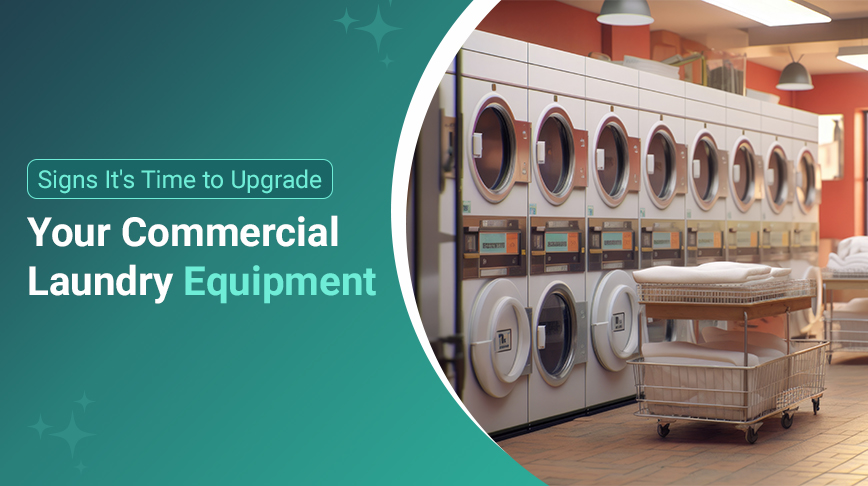
Every machine ages differently, but the warning signs tend to look familiar. Rising bills, slower cycles, and more frequent call-outs rarely show up overnight. They creep in slowly enough that most people don’t notice until the pattern is already well established.
Most businesses delay replacing equipment until something breaks completely. That’s understandable; replacement is a real expense, and nobody wants to spend money on a machine that’s still technically working. But by the time it breaks for good, the cost of downtime often outweighs the cost of the upgrade itself, and you’re deciding under pressure instead of on your own terms.
This guide covers the signals worth watching, so you can plan a replacement before a breakdown forces the decision for you.
Rising Utility Bills You Can’t Explain
Older machines lose efficiency gradually, often without any single obvious fault you could point to. There’s no dramatic failure, just a slow drift where the same load takes a bit more power and a bit more water than it used to. Rising energy costs make that drift far more noticeable, and far more expensive, than it would have been a few years ago.
Electric Ireland raised residential electricity prices by 8% and gas prices by 7.7% from July 2026, citing sustained wholesale market pressure. Business tariffs have faced similar upward pressure over the same period.
If your energy bills keep climbing despite steady laundry volumes, and nothing else in the operation has changed, ageing equipment is often the hidden cause. It’s worth checking before assuming the utility company is simply charging more across the board.
Frequent Breakdowns and Ageing Parts
Occasional repairs are normal. Every machine needs the odd service call; that’s just wear and tear. Repeated call-outs for the same machine are not normal, and they’re usually a sign the equipment is on its way out rather than just having a bad month.
- Repair visits becoming more frequent over recent months
- Replacement parts taking longer to source
- Engineers flagging the same recurring fault
- Repair costs approaching a significant share of the machine’s value
Older machines often rely on parts that are harder to source locally, which extends downtime with every single repair. What used to be a same-day fix can turn into a week of waiting, and that week adds up fast if the machine is central to daily operations.
Longer Wash and Dry Cycles Than Before
A noticeable slowdown in cycle times usually points to worn components rather than anything staff is doing differently. Reduced extraction efficiency, ageing heating elements, or a motor that’s struggling to keep up can all be behind it, sometimes all three at once.
Longer cycles don’t just cost time, though time matters plenty on its own. They also increase water and energy use per load, quietly inflating running costs in a way that’s easy to miss because it happens gradually, load after load, rather than in one visible jump.
Struggling to Keep Up With Demand
Business growth changes laundry demand faster than most people expect going in. Equipment sized for yesterday’s volume often can’t keep pace with today’s, even if nobody planned for that mismatch on purpose; it just happened as the business grew.
- Staff regularly running extra cycles outside normal hours
- Linen backlogs building during busy periods
- Guests, residents, or staff noticing delays in turnaround
- Equipment running nearly constantly with little downtime for maintenance
If your laundry room is working harder than it used to, that’s rarely a staffing issue alone. It’s worth looking at whether the equipment itself has simply outgrown its job, because more staff hours won’t fix a capacity problem.
Compliance or Safety Concerns
For hospitals, care homes, and hotels alike, safety and hygiene compliance matter enormously, and this is one area where ageing equipment can create real exposure. Older machines can quietly fall behind current standards without anyone realising until an inspection flags it.
Machines without validated thermal disinfection cycles, or with unreliable temperature control, can create genuine compliance risk in healthcare and hospitality settings. This isn’t a theoretical concern; it directly affects whether a facility can demonstrate it’s meeting its obligations.
If a supplier or inspector raises concerns about equipment reliability, treat that as a serious signal rather than a minor note to file away. It’s the kind of warning that tends to get more expensive the longer it’s ignored.
Guests or Residents Noticing the Difference
Linen quality is one of the most visible signs of equipment performance, and it’s the sign that reaches the people you’re actually serving. Greying whites, lingering odours, or rough finishing often point to ageing machines rather than a change in detergent or technique.
In hospitality settings especially, linen quality feeds directly into guest experience and online reviews. A guest who notices a musty towel or a stained sheet is far more likely to mention it in a review than in person, which makes it an easy problem to miss until it’s already costing you.
When the Numbers Say It’s Time
Deciding between repair and replacement often comes down to straightforward maths rather than gut feeling. A simple comparison usually makes the answer clear once you actually run the numbers.
| Signal | Likely Cause | Recommended Action |
| Rising energy bills | Worn seals, ageing motor, poor insulation | Compare running costs against a new machine |
| Frequent breakdowns | Ageing components nearing end of life | Weigh repair cost against replacement cost |
| Slower cycle times | Reduced extraction or heating efficiency | Assess impact on daily throughput |
| Repeated compliance flags | Outdated cycle validation or controls | Prioritise replacement over repair |
| Growing demand backlog | Undersized or ageing capacity | Reassess capacity needs before buying |
As a general guide, if a single repair costs more than 25 to 30% of a replacement machine’s price, replacement is usually the better long-term choice. Below that threshold, repair often still makes sense, but it’s worth checking the number rather than assuming.
The Case for Energy-Efficient Commercial Washing Machines
Replacing ageing commercial laundry equipment is often one of the fastest ways to improve operational efficiency. Modern washers and dryers are designed to use less electricity, water, and detergent while delivering consistent cleaning performance, helping businesses reduce utility costs over the equipment’s lifespan.
Many newer machines also feature shorter cycle times, higher extraction speeds, and smart controls that optimise resource consumption and minimise downtime.
For Irish businesses, investing in energy-efficient equipment can also align with broader sustainability goals. The Sustainable Energy Authority of Ireland (SEAI) offers grants and business support programmes that encourage energy-saving upgrades across multiple sectors.
What to Look for in a Replacement
Once you’ve decided to upgrade, focus on features that address your specific pain points rather than chasing general specifications for their own sake.
- Energy and water efficiency ratings suited to your volume
- Capacity matched to current and near-future demand
- Local servicing and parts availability
- Cycle validation features, where compliance matters
- Warranty terms that reflect expected usage intensity
Wrapping Up: Planning the Upgrade Before It Becomes Urgent
Waiting for a complete breakdown rarely saves money, whatever the instinct to delay might suggest. It usually costs more in the end, through emergency repairs, lost productivity, and rushed decisions made with no time to compare options properly.
Watching for these signals early gives you time to plan a replacement on your own schedule, rather than reacting under pressure when a machine finally gives out.
For hotels, hospitals, and care homes across Ireland considering an upgrade, WALE supplies commercial laundry equipment backed by local servicing and IMESA-distributed machinery.
Frequently Asked Questions
How much does it typically cost to replace commercial laundry equipment?
Costs vary widely by capacity and machine type, from a few thousand euros for a single washer to significantly more for full laundry room fit-outs. Get a tailored quote based on your volume.
Can old commercial washing machines be repaired instead of replaced?
Repairs are often worthwhile early in a machine’s life. As machines age, repeated repairs become less cost-effective, particularly once parts availability declines or repair costs approach replacement value.
What’s the average lifespan of commercial laundry equipment?
Well-maintained commercial washers and dryers typically last 10 to 15 years. Usage intensity, servicing frequency, and build quality all significantly affect how long equipment remains reliable.
Are energy-efficient commercial washing machines significantly more expensive upfront?
Energy-efficient models often carry a modest price premium over standard machines. This is typically offset within a few years through lower water and energy costs, especially in high-volume operations.